
The City of Baybay recently celebrated its 12th Charter Day on June 16, 2019. It may be one of the country’s newest cities but it has emerged to be an important economic hub in Eastern Visayas. For the past years, Baybay is not your usual destination for recreation and sight-seeing but it has gained popularity today for faith, farm and ecotourism.
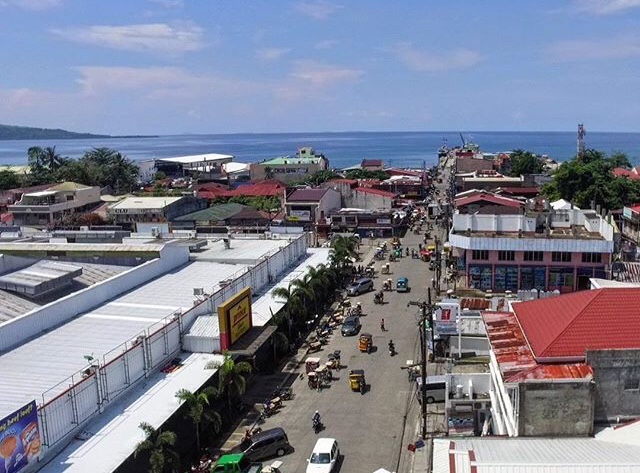
Baybay City has over 647,045 day visitors in 2018, the highest in Eastern Visayas based on data from DOT 8.
Little do people know especially the younger generation that Baybay is one of the region’s oldest towns. It was during the year 1910 when Baybay was incorporated as town, just 14 years after Rizal’s death in Bagumbayan.
I compiled some interesting historical events that most of you probably didn’t know that will make you appreciate the city’s riveting past.
1. A Spanish Settlement
Baybay was believed to be the only settlement on the western coast of Leyte known to the first Spanish conquistadores that came with Magellan, as was Abuyog in the eastern part of the province and Limasawa and Cabalian in the south.
2. How we got our name
Chinese invaders attempted to conquer the community, but the brave and staunch natives foiled several attempts. When the Spanish conquistadors spread themselves out to the provinces, an expeditionary force under Felipe Segundo, evidently looking for a bigger settlement, landed in a barrio north of the town which was and still is called Pangasugan. Landing near the river, he pointed to a spot and asked a native in Spanish for the name of the place. Unable to understand Spanish and thinking that Felipe Segundo wanted to ask about the river, he answered in Visayan, ” Ang suba nagbaybay sa Pangasugan.” This is how Baybay got its name.
3. We are centuries old
Baybay was formally founded in 1620 by the Jesuit fathers after building a church at Brgy. Punta and a mission house which belonged to the “residencia” of Carigara, the first and central station of the Society of Jesuits in Leyte.
4. Church construction lagged for a decade
The construction of Immaculate Conception Church begun under the engineering administration of Mariano Vasnillio during the term of Fr. Vicente E. Coronado in 1852. The construction lagged for ten years after the work was resumed under Maestro Proceso, who came from Manila for the purpose of finishing the work. The church was finally finished in 1870 after Capitan Mateo Espinoso, a sculptor and painter of renown, put on the finishing touches.
5. The first mayor
As the Spanish residents moved away in the early months of 1898, the reins of the local government passed completely into the hands of the Filipino officials. An election was held and Don Quirimon Alkuino was elected as the first Filipino presidente.
6. Changing of barangay names
About 4 months after Don Quirimon Alkuino was elected, Gen. Vicente Lukban nullified the results of the election and ordered one to be held, with the same results. Lukban ordered that barangays of Baybay be named after the tenientes thus Caridad was renamed “Veloso”, Plaridel became “Alvarado”, Bitanhuan was named “Coronado”, San Agustin “Sabando”, Punta “Virginenza”, Pomponan “Montefolka”, Gabas “Bartolini”, etc.
7. A curious case of Filipino nationalists
Filipino nationalists made Baybay one of the areas where they made their last stand against the Americans. Later, the surrender ceremonies were held in the town, but only after numerous conferences between American officers and Filipino pacifists were held to effect the surrender of the resistance leaders.
The surrender of Capt. Florentino Penaranda who was the last to give up the fight was a colorful one. All his men and officers, thousands of them, gathered at the banks of the Pagbanganan River. From there, they marched to the plaza in front of the municipal hall where the American officers were waiting. Before the Filipinos laid down their arms, Penaranda delivered a speech that even today is considered one of the most stirring addresses made in the province.
To commemorate the event, a sumptuous banquet was held for the Americans and the Filipino nationalists. The following day, the Filipino soldiers trekked home in their uniforms to start another life of peace and work.
8. 14 ships docked together
The port of Baybay was closed in 1899 by the American coast guards. The price of commodities soared and products like copra and hemp accumulated in the docks. The order was lifted, but only after 14 ships, the greatest number to dock in port at one time, had stayed in port for days waiting for the order to leave.
9. The ship that caused panic
On February 10, 1901, the first Americans arrived in Baybay on the ship “Melliza”, their arrival caused great confusion and the people evacuated to the barrios. Only a few officials stayed in the town. The next day, soldiers scoured the countryside convincing the people to return to their homes.
10. Coming of religions
A sect of the Protestant religion entered Baybay for the first time sometime in 1900. They established their own church in the poblacion. In 1902, the Philippine Independent Church established itself in the barrio of Caridad; shortly afterwards, the Seventh Day Adventists came in.
11. The puppet government
The Japanese forces came to Baybay in two waves in 1942. A puppet government was established shortly after their arrival wherein Paterno Tan Sr. was the mayor.
12. A ship bombed at port
In 1944, American planes passed the town in bombing missions in Cebu. They bombed a ship at anchor in the port of Baybay and left it in flames. The Japanese Imperial Forces left the town on October 19, 1944
__________

 discoverbaybay.travel.blog