
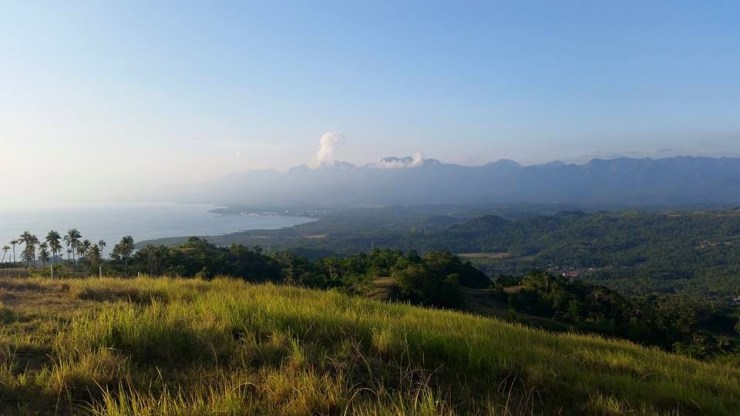
Baybay is still a 10-year old city but it has already been a century since it was officially declared as a town in Leyte. The name of the city has forever deduced not just its visitors, but the locals alike on the origin of its fascinating name.
For many generations, there are several stories abound. But let’s immerse into Baybay’s founding history that dates back during the 1500s.
It was on March 17, 1521 when the existence of the Philippine Islands came to the notice of the western world after Ferdinand Magellan and his group landed in Limasawa in southern Leyte where the first mass was celebrated on March 31, 1521, one Eastern Sunday.
After the death of Magellan in Mactan, King Philip II of Spain decided to send another expedition headed by Miguel Lopez de Legazpi. With him were Augustinian Friars. They opened their first mission in Carigara in 1580 under the leadership of Fr. Alonso Vasquez. But the Augustinians did not establish permanent mission stations since they did not stay long in Leyte.

The Christianization of Leyte started in 1595 which marked the divisions of the country into district missionary territories assigned to the different religious congregations. By virtue of this division, the first Jesuit missionaries came to Leyte to begin its systematic evangelization where a group of priests established their first mission in Carigara and Dulag.

The missionary activities of the Jesuits in Leyte were unfortunately cut short due to their expulsion in 1768. The Augustinians were recalled to take over the 19 mission stations left vacant by the Jesuits. They continued the work of evangelization and established several parishes.
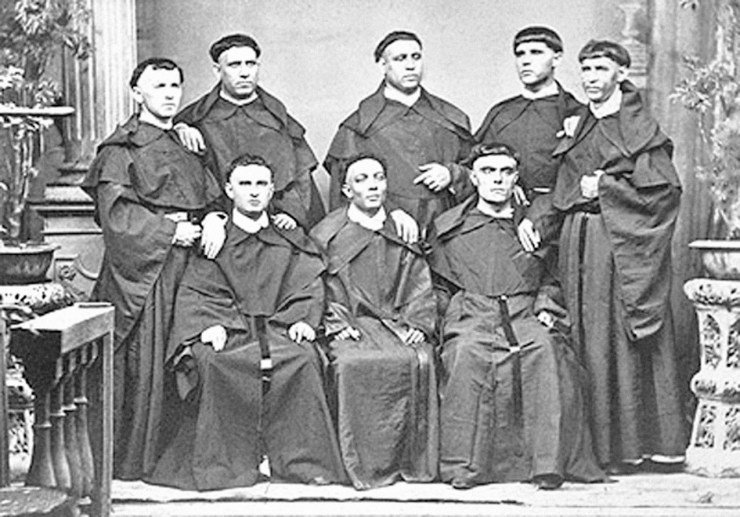
Later the Augustinians handed over the parishes to the Franciscan missionaries who opened new stations in the island. The Franciscans devoted themselves in teaching the natives how to build and furnish simple human habitations, like farming and things that contribute to social, religious and economic progress
Perhaps this is how Baybay came into existence as the missionaries combined zeal with hard physical labors in settling the natives in building roads and clearing out forests. It was the Franciscan missionaries who founded the community which later on is to be called Baybay.

The earliest mention of the town of Baybay, as one of the villages in Leyte was on Loarca’s Spanish Report (1582) together with the towns of Barugo, Yodmoc, Palos, Abuyo, Dulaguc, Ylongos, Bato and Tugud. These villages were assigned as Encomiendas to the Spaniards of Cebu. The Encomiendas collected taxes and tributes form 8 – 12 reales payable annually.
It must have been at this time that the island of Leyte was parceled into towns and entrusted to the missionaries. Hence the town of Baybay could trace its ancient roots as far back as 1567 under the Augustinians. A theory states that name of “Baybay” was originated from the term “namaybay” (beside the shore) or from “Babaylan” (chief) because early settlements are commonly found along shorelines whose chieftains are called “Babaylan.”
But a prevailing story of Baybay’s etymology is far more interesting. During the mid 1550s, A group of Spanish conquistadors under Felipe Segundo evidently looking for a bigger settlement, landed in a barrio north of the town which was and still is called Pangasugan. Landing near the river, he pointed to a spot and asked a native in Spanish for the name of the place.
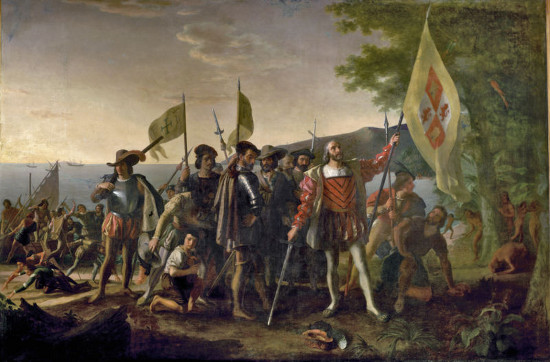
Unable to understand Spanish and thinking that he just wanted to ask about the river, the barrio folk answered in Visayan, “Ang suba nagbaybay sa Pangasugan.” (That river passes through Pangasugan). Segundo was only able to pick up the word “baybay” thus they named the place as such.

But the origin of the city’s name doesn’t end there. Perhaps the most reasonable reason how Baybay got its name is the fact that it has the longest coastline or seashore in the island of Leyte. What made it coherent? It’s simple—the word “seashore” when translated to Visayan is “baybayon“.
So let’s make a short recap, when somebody asks you how did Baybay get its name, you have many options:
1. “Nabaybay” — beside the seashore
2. “Babaylan” — the native chieftain
3. “Nagbaybay” — it passes through
4. “Baybayon” — coastline or seashore
But one thing’s for sure—with the city’s charming quaintness and fantastic natural wonders, complete with the genuine Baybayanon hospitality, it’s kinda hard to say “bye-bye” to Baybay.


We Love Baybay…….#FOREVER
LikeLiked by 1 person
You seem to be a quite talented blogger! You are obviously well-spoken and articulate in promoting the City of Baybay. You have used your talent well. I am requesting you sir, please, to edit the information about Baybay in Wikipedia as it is outdated and not as comprehensive as your blogs, and we could use some of that dexterity. Thank you sir!
LikeLike
Wow! Thank you for your kind words sir. I really appreciate it. I’m continuously searching for interesting topics to be featured on the blog. As to Wikipedia, I’ll check it out. I don’t have any idea how to edit Wiki articles. Keep safe! 🙂
LikeLike
miss kuna probinsya ko
LikeLike